Did I Sleep Last Night?
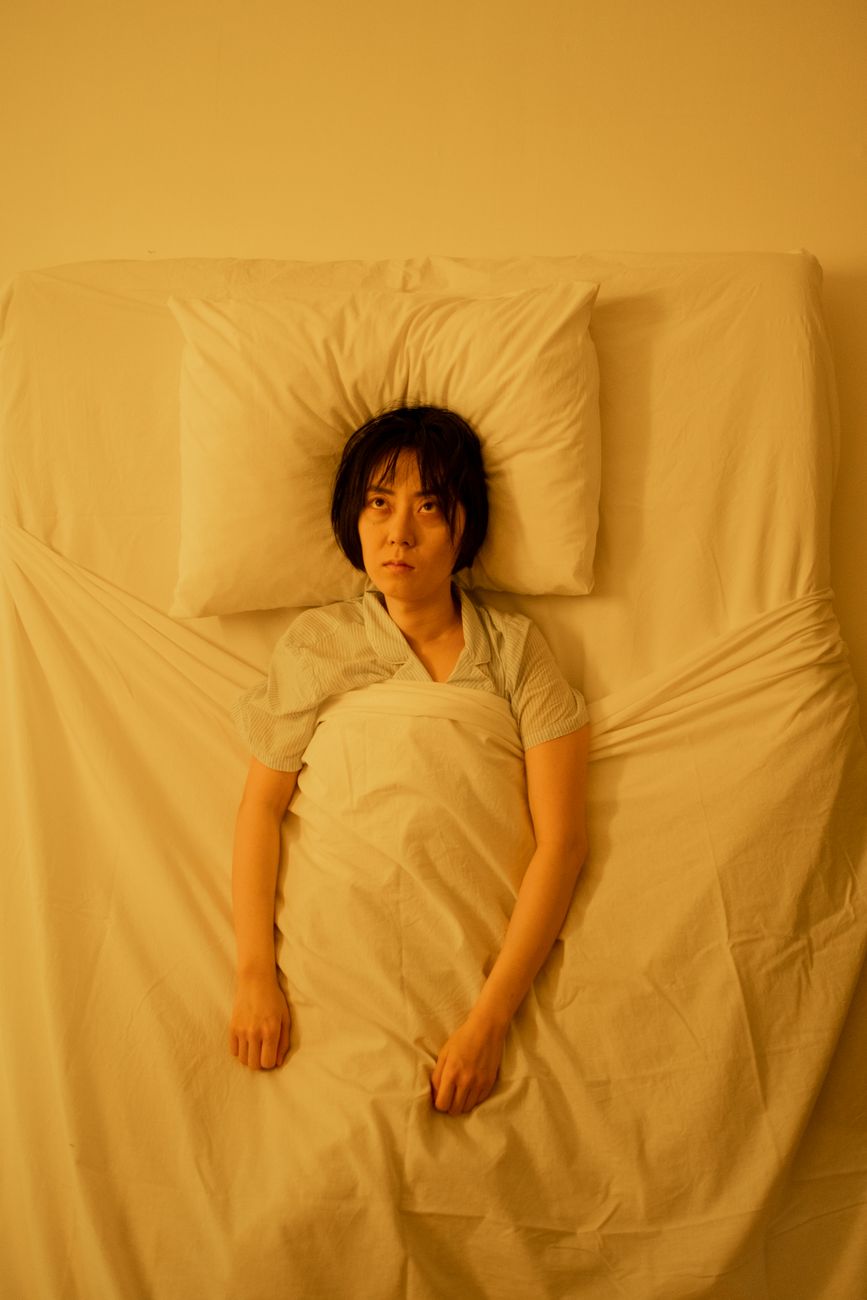
Have you ever woken up in the morning and genuinely wondered, Did I sleep? You remember lying there for what seemed like hours. You were aware of the room, aware of your thoughts, and perhaps aware of every little sound around you. You never felt yourself drop into deep sleep, and your conscious awareness seemed to remain online for most of the night.
This experience is sometimes called paradoxical insomnia or sleep state misperception. The terminology can be confusing, but the experience itself is very real: sleep may feel so light, fragmented, or elusive that you are left wondering whether you actually slept at all.
Time can take on a strange quality during these nights. Twenty minutes can feel like two hours, and the entire night can seem to pass with you hovering somewhere between wakefulness and sleep.
When Sleep Drive Isn’t the Problem
Two important forces influence our ability to sleep: sleep drive and arousal. Sleep drive increases the longer we remain awake, creating an increasingly powerful biological pressure to sleep. This is why, after a long period of wakefulness, you can feel profoundly exhausted and desperately ready for sleep.
Most people with chronic insomnia have plenty of sleep drive. They aren’t lacking the biological need for sleep. The difficulty is often on the other side of the equation: hyperarousal.
Hyperarousal is a state of heightened alertness in which the brain and body remain more engaged than they need to be for sleep.
Hyperarousal Is Normal
It is important to understand that hyperarousal itself is not abnormal.
We all experience arousal to some degree, and it is perfectly normal to sleep while stress hormones are circulating through your body. Your safety system does not need to completely shut down for you to sleep. In fact, the ability to remain responsive to your environment while sleeping is evidence that your safety system is functioning as it should.
Hyperarousal can be triggered by things we typically associate with anxiety—worry, fear, stress, and uncertainty—but it can also arise from curiosity, excitement, anticipation, novelty, joy, or wonder.
The common denominator is attention and engagement. For those that experience chronic insomnia, sleep itself can become something your brain pays enormous attention to.
The Sleep Monitor Never Goes Off Duty
Am I sleeping yet? Was that sleep? How long have I been awake? Did I just fall asleep, or was I only resting?
You may begin monitoring your body, your thoughts, the clock, and every sensation that might tell you whether sleep has finally arrived. Without realizing it, you become the sleep monitor, and monitoring requires awareness.
The more you look for confirmation that you are asleep, the more aware you can become of the fact that you are still conscious. Sleep becomes a problem to solve, and your brain continues looking for evidence that something is wrong.
The goal isn’t to make the guard disappear, but to take the guard off duty.
You Don’t Have to Completely Eliminate Hyperarousal to Sleep
Your brain may be convinced that there is a threat that requires vigilance, even when you consciously know that you are safe. You don’t necessarily have to fight that response or figure out how to force it to stop.
Instead, you can begin shifting toward safety and acceptance. For example, thoughts that suggest an acceptance of hyperarousal are:
This is uncomfortable, but it isn’t dangerous. My body can sleep even when some arousal is present. I don’t have to know whether I’m sleeping. I don’t have to fix this.
Another way in which you can temper hyperarousal is to address unresolved fears, stress, or suppressed emotions. These patterns can play a significant role in perpetuating insomnia. Journaling, or therapeutic writing, provides a pathway to release built-up pressure that has accumulated over the course of a lifetime due to very human reasons. This built-up pressure can be a result of unprocessed experiences, early conditioning, chronic stress, subtly reinforced emotional patterns, or avoidance tendencies. Putting these thoughts, feelings, anger, fear, resentment, or other difficult emotions onto paper can sometimes reduce the need to carry and monitor them internally, allowing some of that hyperarousal to settle rather than continuing to feed the insomnia cycle. I write more about the benefits of therapeutic writing here.
When you stop giving insomnia attention, you take yourself out of the puzzle. You aren’t trying to defeat hyperarousal or force your body into sleep. You are simply allowing the experience to be there.
And when the “guard” realizes that you aren’t fighting it, monitoring it, or treating its presence as evidence of danger, there may be less reason to remain so vigilant.
What If You Are Actually Sleeping?
One of the most reassuring possibilities is this: if you wake up wondering whether you slept, you probably did sleep.
That doesn’t mean every night of perceived wakefulness is actually a night of normal sleep. Some people genuinely experience very fragmented or insufficient sleep. But hyperarousal does not necessarily prevent sleep entirely.
You may be sleeping in a lighter state, with awareness remaining closer to the surface. You may not experience the dramatic sensation of “falling asleep” that you expect. And because you are not completely unconscious to your surroundings, the night can feel much more wakeful than it actually was. But, your body doesn’t need your conscious confirmation that sleep occurred. Your body already knows how to sleep, even when your brain is telling you to stay on guard.
If this experience sounds familiar, the Rest ReSET can help you explore the deeper patterns that may keep chronic insomnia going. And if you’d like more conversations about chronic insomnia, hyperarousal, and the mind-body connection, sign up for my newsletter. The sign-up is below.